Crucifix
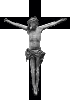
This page looks at one particular cross form - a cross adorned with the corpus of Jesus Christ - favoured by Catholic and Orthodox Churches more than Protestant, and which is therefore sometimes called a Catholic Cross in contrast to the plain Protestant Cross.
A Crucifix is any cross with a superimposed figurine, usually representing the crucified body of Jesus. This figure is known as a Corpus and it can be two-dimensional (painted, for example) or three-dimensional.

800-year-old Rood Cross, Church of Stenkumla, Gotland, Sweden
In many churches, especially medieval Catholic, Orthodox and Anglican churches, a life-size cross and corpus is set above the entrance to the chancel. This style of crucifix is called a Rood Cross; the name being derived from Old Saxon roda (from which we get the word "rod"). Christian crosses were originally called roods, until later replaced by the Old Norse cros. An alternative term today for a Rood Cross is a Triumphal Cross.
A representation of Jesus has not always been the norm for a crucifix. On early Christian crosses, rather than risk offence by attempting to create an image of Christ, the custom was to show a lamb; a symbol of sacrifice.
Ideas about life and death in general must have changed during the Great Plagues that swept through Europe in the Middle Ages (see Black Death Cross). Death was no longer a matter of dying through old age; the pestilence wiped out whole families and communities of all ages. And the death was not the peaceful grandparent drifting into permanent sleep; deaths were violent, leaving twisted and grotesque bloodied faces on the corpse.
This reminded crucifix makers that Jesus' death was also gruesome. Jesus did not pass-away in comfort, which is easily imagined looking at a figure of a cuddly little lamb. Possibly for these reasons, imagery changed from the sacrificed lamb to that of a man, with a face and body wracked by physical and spiritual pain.
Alex Roman explains:
Crucifixes showing Christ in his 'extreme humility' on the Cross often show him having offered his Soul into the hands of the Father through the Spirit. This proclaims that he has gone on to release the souls from Hades before returning to life in his body on Easter. Although the Soul of Christ was separated from his body at that time, his divinity was not.
The Cross with the Corpus underscores that Christ laid down his life voluntarily and took it up again by the power of his divinity in the Resurrection that transforms the suffering he underwent and also our own suffering.


